
Band D in Wymondham is £2,482.42 for 2026/27, up 4.7% and above the England average. The full A to H table, and the parish that put its share up 138%.
A band D home in Wymondham pays £2,482.42 in 2026/27. That is £111.55 more than last year, a rise of 4.7 per cent, and it is above the England average band D of £2,392.
South Norfolk Council publishes the band D figure on its website. It publishes the full A to H table for all 118 parishes only inside a PDF, the Notice of Council Tax 2026/27, which is where everything below comes from. The notice records that the council set these amounts at its meeting on 18 February 2026.
The quick answer
- Band D in Wymondham: £2,482.42 for the year, or £248.24 a month over ten instalments.
- Only £180 of that is South Norfolk Council’s. Norfolk County Council takes £1,843.38 and the police £344.79.
- Wymondham Town Council’s share is £114.25, which is modest by district standards.
- The full A to H table is below, along with what every other town in the area pays.
- Nine parishes pay nothing to a parish council at all, so their bill is £2,368.17 at band D.
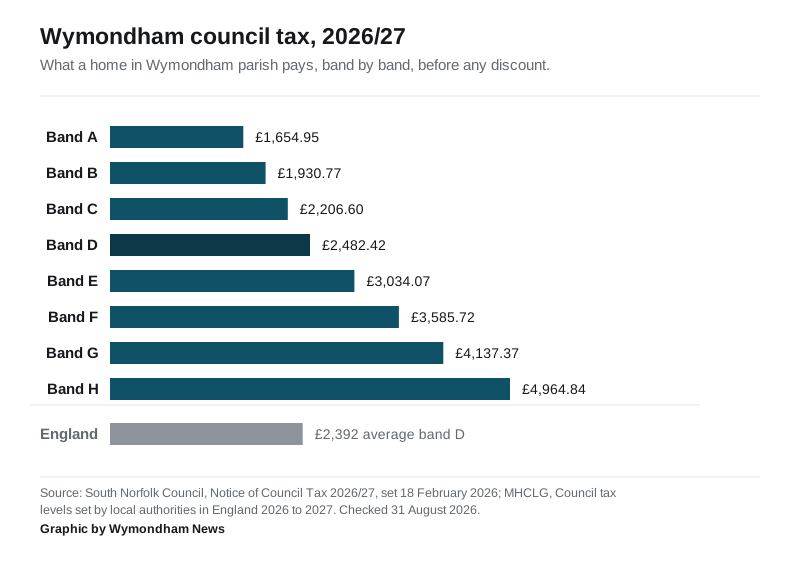
Every band, Wymondham 2026/27
| Band | 1991 value | Charge | Per month over 10 | Per month over 12 |
|---|---|---|---|---|
| A | Up to £40,000 | £1,654.95 | £165.50 | £137.91 |
| B | £40,001 to £52,000 | £1,930.77 | £193.08 | £160.90 |
| C | £52,001 to £68,000 | £2,206.60 | £220.66 | £183.88 |
| D | £68,001 to £88,000 | £2,482.42 | £248.24 | £206.87 |
| E | £88,001 to £120,000 | £3,034.07 | £303.41 | £252.84 |
| F | £120,001 to £160,000 | £3,585.72 | £358.57 | £298.81 |
| G | £160,001 to £320,000 | £4,137.37 | £413.74 | £344.78 |
| H | Over £320,000 | £4,964.84 | £496.48 | £413.74 |
Your band is not based on what your house is worth now. It is based on what it would have sold for on 1 April 1991, and that date has never moved since council tax began in 1993. Band A always pays two thirds of band D and band H always pays double, everywhere in England.
The monthly columns are the annual charge divided evenly. Bills default to ten instalments. South Norfolk will switch you to twelve on request, which cuts the monthly figure by about a sixth, and you ask by emailing the council tax team.
Who actually gets the money
Four bodies levy the bill and South Norfolk Council only collects it. At band D:
| Body | 2025/26 | 2026/27 | Increase | Rise |
|---|---|---|---|---|
| Norfolk County Council, including adult social care | £1,755.63 | £1,843.38 | £87.75 | 5.0% |
| Norfolk Police and Crime Commissioner | £329.85 | £344.79 | £14.94 | 4.5% |
| South Norfolk Council | £175.00 | £180.00 | £5.00 | 2.9% |
| Wymondham Town Council | £110.39 | £114.25 | £3.86 | 3.5% |
The county council takes 74 per cent of the bill, the police 14 per cent, South Norfolk Council 7 per cent and town and parish councils about 5 per cent. Those shares are the council’s own, from its My South Norfolk Council Tax bill page.
The district’s own increase, 2.9 per cent, is the smallest of the four and worth £5 a year at band D. It makes almost no difference to what lands on the mat. The county council’s 5 per cent rise is worth £87.75, seventeen times as much.
Across South Norfolk the average bill rose 4.9 per cent. The average parish precept rose 6.8 per cent, the fastest of any component.
What your parish adds, and the ones that went up hardest
Some parishes charge nothing but the county, police and district, and their band D bill is £2,368.17. Nine sit at exactly that figure in 2026/27, which makes it the base everyone else builds on: Carleton St Peter, Framingham Pigot, Hedenham, Heywood, Holverston, Howe, Raveningham, Sisland and Thwaite.
Subtract £2,368.17 from any parish’s band D charge and what is left is the town or parish council’s own share. On that arithmetic, the places this paper covers pay:
| Town or parish | Band D 2026/27 | Parish share | Change on last year |
|---|---|---|---|
| Diss | £2,624.36 | £256.19 | up 3.7% |
| Trowse with Newton | £2,609.93 | £241.76 | up 47.5% |
| Redenhall with Harleston | £2,603.05 | £234.88 | down 0.1% |
| Long Stratton | £2,586.92 | £218.75 | up 16.3% |
| Cringleford | £2,552.17 | £184.00 | no change |
| Loddon | £2,551.60 | £183.43 | up 6.5% |
| Poringland | £2,523.50 | £155.33 | up 20.2% |
| Costessey | £2,522.38 | £154.21 | up 3.9% |
| Mulbarton | £2,485.09 | £116.92 | up 17.1% |
| Wymondham | £2,482.42 | £114.25 | up 3.5% |
| Hingham | £2,471.51 | £103.34 | up 2.3% |
| Hethersett | £2,464.23 | £96.06 | up 6.5% |
| Ditchingham | £2,439.27 | £71.10 | up 4.1% |
| Spooner Row | £2,433.17 | £65.00 | up 9.4% |
| Tasburgh | £2,429.77 | £61.60 | up 0.8% |
| Barford | £2,427.17 | £59.00 | up 4.2% |
| Wicklewood | £2,396.88 | £28.71 | down 1.2% |
| Bressingham and Fersfield | £2,395.52 | £27.35 | up 4.7% |
Diss is the most expensive place to live in South Norfolk for council tax purposes, at £2,624.36 at band D, £142 a year more than Wymondham. The cheapest are the nine parishes with no precept at all.
Comparing this year’s notice with last year’s turns up rises the council never draws attention to, because it publishes only the district-wide average of 6.8 per cent. The steepest, by the parish share alone:
- Ashwellthorpe and Fundenhall: up 138 per cent, from £35.94 to £85.40 at band D.
- Aslacton: up 72 per cent, from £32.50 to £56.00.
- Barnham Broom: up 51 per cent, from £51.67 to £78.20.
- Flordon: up 50 per cent, from £86.18 to £129.16.
- Trowse with Newton: up 48 per cent, from £163.90 to £241.76, taking its total bill up 7.7 per cent.
South Norfolk Council is explicit that it has no power to control parish precepts, and there is no referendum cap on them. Your parish clerk sets that part of the bill, and your parish clerk is who to ask about it.
Two parishes pay one extra item. Costessey and Gillingham carry a “special expense” for footway lighting, which South Norfolk provides on the parish council’s behalf and charges only to those areas.
How Wymondham compares nationally
The England average band D for 2026/27 is £2,392 including parish precepts, up £111 or 4.9 per cent, according to the government’s own council tax statistics. Wymondham’s £2,482.42 is £90 above that. Excluding parish precepts the England average is £2,343, against South Norfolk’s base of £2,368.17.
South Norfolk’s 4.9 per cent average rise matches the national one exactly.
Checking and challenging your band
Bands are set by the Valuation Office, which became part of HMRC on 1 April 2026. The council no longer refers to it as the VOA.
- Look up any address free on gov.uk.
- Challenge a band through the Valuation Office’s own guidance. It costs nothing.
- If you cannot use the online service, the number is 03000 501 501.
- Keep paying at your current band while a challenge is decided.
South Norfolk warns specifically about firms that charge an upfront fee to get a band reduced. Doing it yourself is free. A dispute about liability rather than banding goes to the council first, at counciltax.snc@southnorfolkandbroadland.gov.uk, and then to an independent valuation tribunal within two months of its decision.
One current administrative point. The council has confirmed that the bank details printed on the back of some council tax bills issued on 1 March 2026 were wrong. The correct details are sort code 20-26-42, account number 83490173, quoting your council tax reference.
Paying less: discounts, exemptions and the 87 per cent cap
The bill assumes two adults. More than two makes no difference. Fewer can.
- Single resident discount: 25 per cent if you are the only adult in the property.
- Students: a property where everyone is a full time student is exempt entirely. The definition is a course of at least one academic year, at least 24 weeks’ attendance and at least 21 hours a week in term time.
- Severe mental impairment: exempt if all occupants qualify, 25 per cent off if all but one do, nothing if two do not. A doctor has to certify it.
- Disabled band reduction: a home adapted for a disabled resident can be moved down a band, and a home already in band A can still get a reduction.
- Annexes: a self-contained annexe in a relative’s home gets 50 per cent off, and an elderly or disabled relative living in one may pay nothing.
- Empty and unfurnished: free for up to one month only. South Norfolk says over 65 per cent of empty periods end within a month, which is why it cut the discount from three months.
- Second homes get a 5 per cent discount. That is unusual. Most English councils now charge a premium on furnished second homes instead.
Long term empty homes are charged a premium, and the council states it two different ways on two different documents, which causes confusion. The extra charge is:
- An extra 100 per cent after two years empty, so you pay twice the normal bill.
- An extra 200 per cent after five years, so three times the bill.
- An extra 300 per cent after ten years, so four times the bill.
The clock runs with the property, not the owner, so buying an empty house does not reset it. Six classes of exception apply from April 2025, including homes actively marketed for sale or let (12 months), annexes, homes awaiting probate (12 months from the grant) and homes undergoing major repairs (12 months).
Council Tax Reduction
South Norfolk runs its own scheme for people on low incomes, and the number that matters is buried in the scheme document rather than on the web page:
- Pension age claimants can get up to 100 per cent of the bill covered.
- Working age claimants are capped at 87 per cent, so everyone of working age pays at least 13 per cent of the bill however low their income. The exception is a working age claimant receiving a war pension, who can get 100 per cent.
- Capital over £16,000 rules you out. Between £6,000 and £16,000 for working age claimants, and £10,000 to £16,000 for pensioners, an assumed income is added.
- Support tapers as income rises rather than stopping at a cliff edge.
Those figures are from the South Norfolk Council Tax Reduction Scheme 2026/27. Claims go through the benefits team on 0808 178 7143. Report a change of circumstances within one month or you risk having to pay support back.
Also on this site
- Wymondham house prices, which have nothing to do with your band
- Wymondham bin collection days, the other service the district runs
- Parking in Wymondham
- Wymondham roadworks and travel
Have your say