
South Norfolk's housing register reached 904 households in July, up 13% in eight months. Comments on the council's draft housing strategy close on 9 December.
South Norfolk’s housing register held 904 households in July, 13% more than eight months earlier. Two in three of them need a one-bedroom home.
The figures come from the evidence behind the council’s draft Housing Strategy for 2027 to 2030. The council opened a consultation on it on 11 November. Anyone can comment until 11.59pm on Wednesday 9 December.
What the council’s own evidence shows
The evidence base, dated August 2026, sets out the pressure in plain numbers:
- 904 households were on the housing register in July 2026, up 13% in eight months.
- 66% of them need a one-bedroom home. Single people make up 92% of that group.
- 479 households came to the council as homeless or at risk of it in 2024/25, up 67% from 299 in 2021/22.
- 99 households were in temporary accommodation in June 2026, up from 39 in April 2022. Almost three quarters of them were single households.
- 75 one-bedroom social rent homes, 34% of those let in 2025/26, went to households in temporary accommodation.
The council’s modelling says South Norfolk needs 630 social homes over the next five years to meet the register. It puts the need for one-bedroom homes at 397 of them.
In the three years to March 2026, 260 one-bedroom affordable rent homes were completed. The draft strategy says that “still falls short of demand”, with around 600 households on the register needing a one-bedroom home.
Why people are losing their homes
Between October and December 2025, the most common reason a household faced losing its home was the end of a private tenancy, at 36%. Family or friends no longer willing to put someone up came next, at 30%.
Among households already homeless, nearly 41% were fleeing domestic abuse. Across all homelessness applications in those three months, the figure was 35%.
Private rents and the housing allowance gap
Average private rents in South Norfolk have risen by 63% since 2015, to £981 a month. The council’s figures for typical monthly rents are:
| Home | Average rent a month |
|---|---|
| 1 bedroom | £696 |
| 2 bedrooms | £890 |
| 3 bedrooms | £1,106 |
| 4 bedrooms | £1,574 |
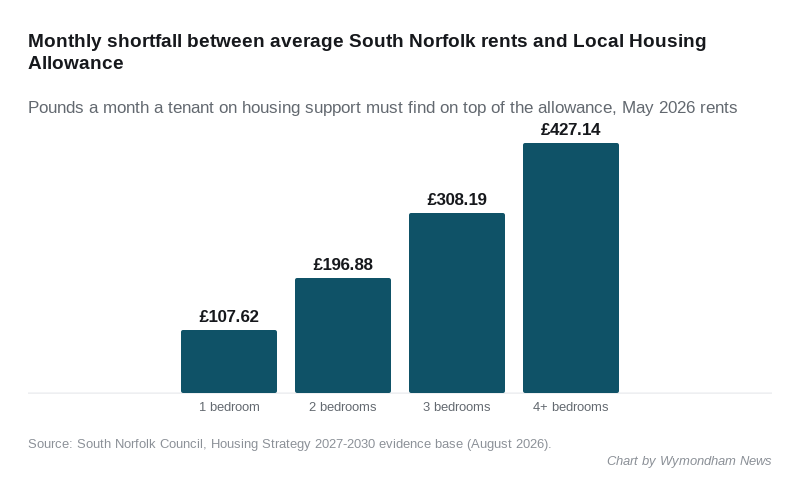
For tenants who get help with their rent, Local Housing Allowance falls short at every size. The gap runs from £107.62 a month for a one-bedroom home to £427.14 for four bedrooms or more.
The evidence also finds that between 20% and 24% of private rented homes are non-decent, and that around half of all homes in the district are rated EPC D to G.
What the strategy promises
The draft is built on three themes. The first is supply and affordability. Under it, the council says it will:
- support homes that meet identified need, with a focus on affordable housing
- work with housing associations and developers to unlock building
- widen the mix of tenures and sizes, including in villages
- keep planning for a possible new settlement in Greater Norwich
The other two themes cover the quality of existing homes, and homes that help people live safely and independently. Several of the measures of success are still marked “metrics to be confirmed” in the draft.
Councillor Graham Minshull, South Norfolk’s cabinet member for housing, said: “Everyone deserves a safe, secure and affordable place to call home.”
What it means for you
You do not need to be on the housing register to respond. The council wants to hear from renters, first-time buyers, people downsizing and anyone supporting someone with housing needs.
- Read the draft and the evidence on the council’s Housing Strategy page.
- Comment through the South Norfolk survey.
- The deadline is 11.59pm on Wednesday 9 December 2026.
Feedback will be used to refine the strategy before councillors decide whether to adopt it.
Have your say