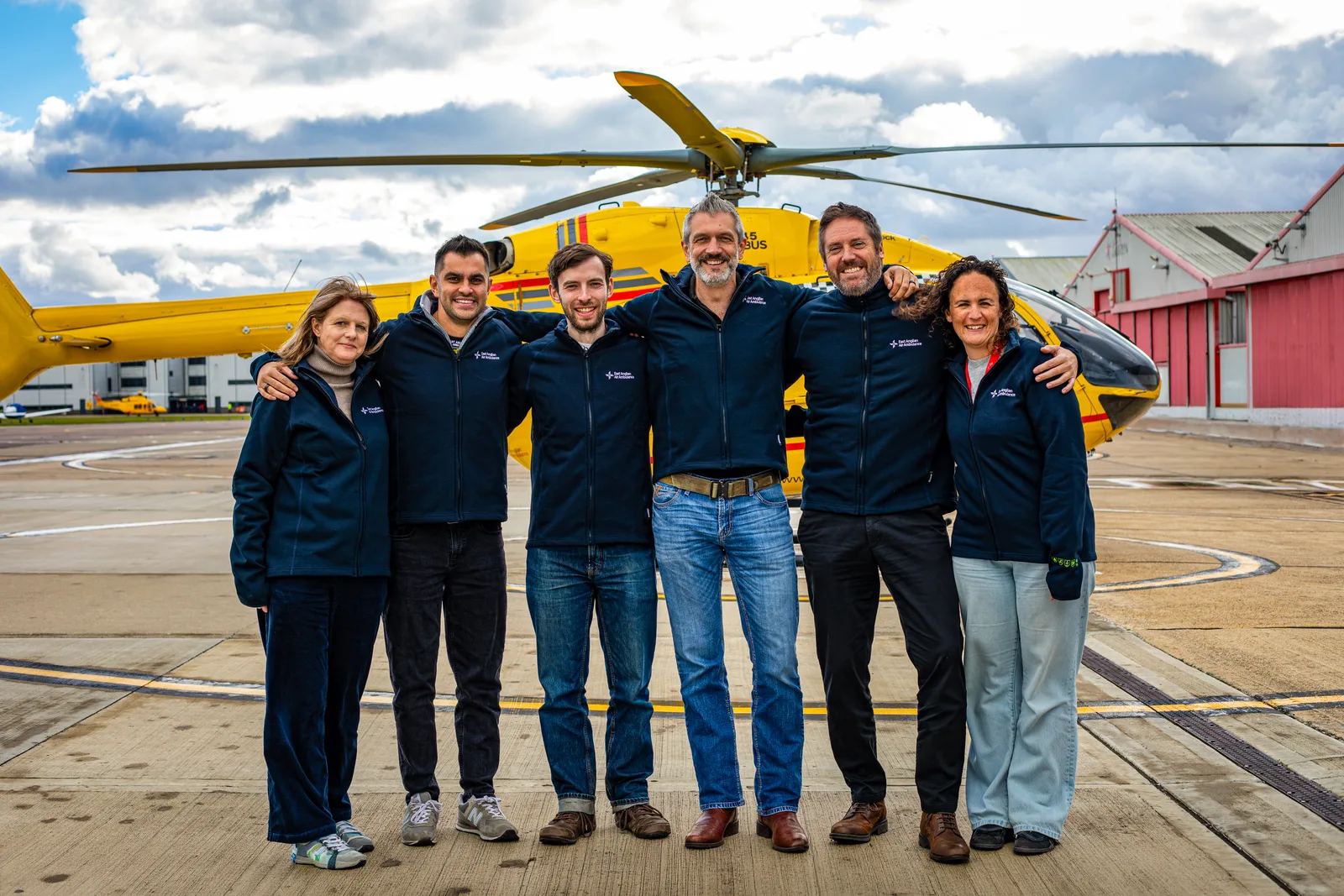

East Anglian Air Ambulance crews used a balloon in the aorta on 39 cardiac arrest patients with no complications. Blood pressure rose 59%; survival is unproven.
The air ambulance that serves Wymondham has tested a new treatment for people whose hearts will not restart. Its doctors and paramedics passed a small balloon into the body’s main artery at the scene, then inflated it to push blood towards the heart and brain.
East Anglian Air Ambulance treated 39 patients in the pilot, called ERICA-ARREST. It recorded no complications from the procedure. The charity published the findings on 10 November and says this is the first study of its kind in the UK.
Overview
- What: a balloon inflated inside the aorta during CPR, a procedure called REBOA
- Who: 39 adults in cardiac arrest outside hospital, across the charity’s four counties
- Result: no procedure complications, and diastolic blood pressure up 59% on average
- The caveat: the study had no comparison group, so it cannot show whether the balloon saves lives
The Norfolk crew
Wymondham’s nearest crew flies from Helimed House at Norwich Airport, home of the helicopter Anglia One. The charity’s bases page says the Norwich base gives a service by air and road 24 hours a day.
The Norfolk and Norwich University Hospital at Colney is among the hospitals the crews use most, and the charity lists it for specialist cardiac services. On average its crews fly or accompany two patients a day there, its hospitals page says.
Cardiac arrest outside hospital is the charity’s most common type of mission. Up to 30% of the medical emergencies it attends are heart-related.
How the balloon works
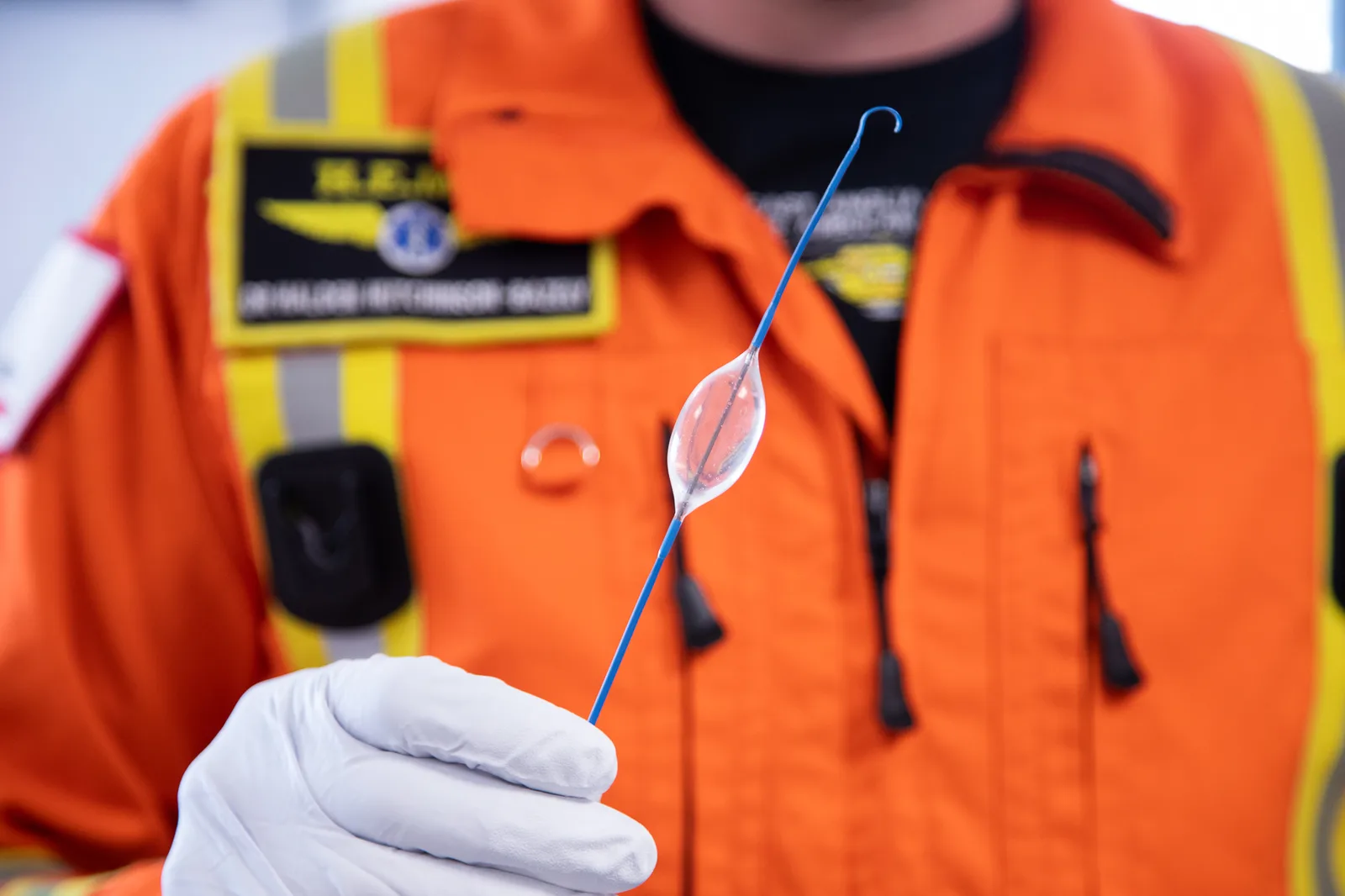
REBOA stands for Resuscitative Endovascular Balloon Occlusion of the Aorta. Hospitals mostly use it to stop severe internal bleeding.
The clinician threads a small balloon through an artery in the groin and inflates it in the aorta. In a cardiac arrest, that briefly cuts blood flow to the lower body. More of the blood moved by chest compressions then reaches the heart and brain.
It was tried only on patients who had not responded to standard advanced resuscitation.
What the pilot found
The charity’s findings, in its own figures:
| Measure | Result |
|---|---|
| Patients in the study | 39, mean age 58.7 |
| Time from arrest to balloon inflation | median of 51 minutes |
| Complications from the procedure | none observed |
| Average rise in diastolic blood pressure | 59% |
| Patients where the balloon was confirmed to block the aorta | 33 |
| Of those 33, hearts restarted and kept beating | 24.2% |
| Of those 33, survived to leave hospital | 6.1% |
Those last two percentages are eight people and two people.
The researchers say the survival figures must be read with caution. The study was built to test whether crews could do the procedure safely, and whether it changed blood flow. It had no control group and was not designed to show a survival benefit.
What the lead doctor said
Dr James Price is a consultant emergency physician at Cambridge University Hospitals and the charity’s consultant lead for research and development.
“Patients who remain in cardiac arrest despite prolonged resuscitation efforts currently have very limited treatment options and face extremely poor outcomes,” he said.
“Our study has shown that REBOA can be delivered safely by pre-hospital critical care teams and can improve blood pressure during cardiac arrest, helping to direct blood flow to the organs that matter most.”
He said the findings were “a strong foundation for further research”.
The study ran with Queen Mary University of London and is registered as NCT06071910. The charity’s trial page says it had NHS research ethics approval. The release does not name a journal paper.
What it means for you
Nothing changes yet for anyone who collapses in Wymondham or south Norfolk. The balloon is not a routine treatment, and a bigger trial with a comparison group would be needed to show whether it saves lives.
The first few minutes still matter most. Call 999, start chest compressions and get a defibrillator to the patient as fast as possible.
Sources
- ERICA-ARREST pilot study findings revealed, East Anglian Air Ambulance, 10 November 2026, and the charity’s release sent to Wymondham News
- ERICA Arrest Trial, East Anglian Air Ambulance
- Operational bases and hospitals and helipads, East Anglian Air Ambulance
- NCT06071910, ClinicalTrials.gov
Have your say